A beautiful, durable floor can transform the look and feel of your home. Enter a room with the perfect floor and suddenly the room feels cozier, brighter, more considered. But selecting an expensive looking floor is not as simple as picking the nicest looking color in the showroom. Adelaide’s climate, sun exposure, moisture, room use, even the condition of your subfloor can all impact the performance of the floor. After all, a busy family kitchen requires different characteristics to a quiet bedroom, while an open-plan living space has different visual and performance considerations to a traditional, enclosed lounge.
The trick is to find a floor that looks stunning while quietly performing a job that will see it used for years to come. Looking at the whole floor, not just the aesthetics, is the key to finding a beautiful, high-performance material for your floors. By considering the following factors, Adelaide homeowners can begin their quest for the ultimate floor design. They may discover not everything they are looking for is available, so choosing the right product for the right room is essential.
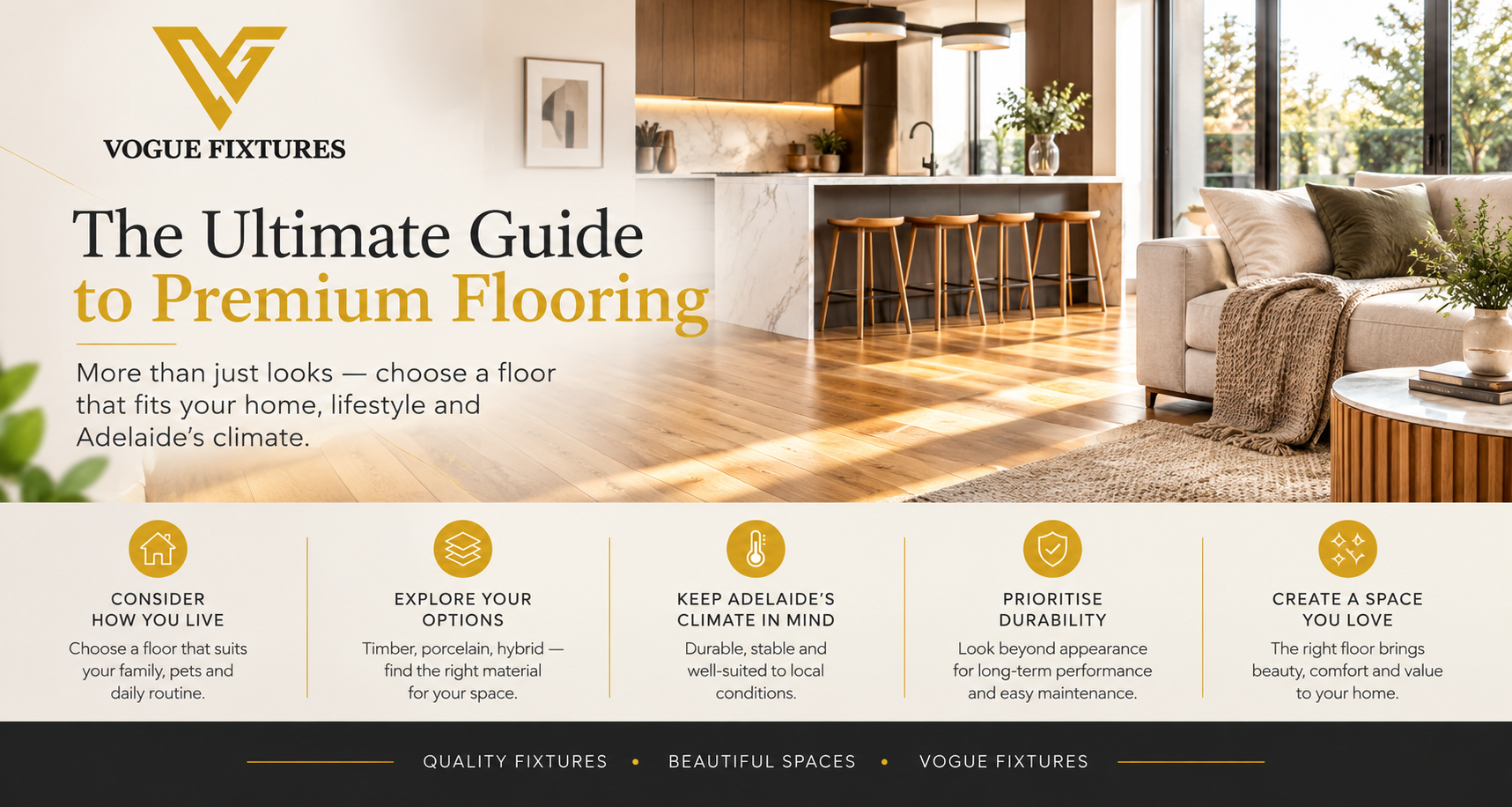
Start With How Your Home Is Actually Used
The first step to choosing a premium flooring Adelaide homeowner can rely on is to think about your life rather than a passing fad. Think about the people using the floor, how the floor will be used on a daily basis, whether it will be exposed to spills, muddying, pets or furniture. A hallway, kitchen and living room will generally need a more durable surface than a guest bedroom.
Open-plan homes also need special consideration. If the kitchen, dining and living areas are connected, using the same flooring style can create a seamless look. This can make the separate areas feel like part of a larger space. For households with children or pets, scratch resistance and ease of cleaning may be more important than a delicate finish. In a more tranquil home, the appeal, comfort and natural character of the floor may be a higher priority.
Understand The Main Luxury Flooring Options
There is no single definition of a premium floor, but a high-end floor should reflect a pleasing blend of form and function. Natural timber is a popular choice as it offers a unique character across all planks. This is ideal for creating warmth in traditional and contemporary interiors but requires the appropriate installation. Timber also needs to be considerate of other elements in the home, such as moisture. Engineered timber can provide similar natural appeal but in a layered construction, and it is worth understanding the thickness and quality of the wear layer rather than focussing only on the appearance of the material.
Porcelain is another compelling alternative. Modern designs can mimic the formation of stone, concrete or timber but offer a more durable and easy to keep surface. When comparing porcelain flooring Adelaide options, it is worth studying the technical specifications, slippage characteristics, finish and suitability for the intended area. Hybrid flooring has also been a useful alternative for homeowners who want timber inspired visual charm without going for traditional timber. When comparing hybrid flooring Adelaide options, it is worth understanding the construction, wear layer, locking system, claims around water resistance and manufacturer installation requirements before making the choice to go hybrid.
Match Flooring To Adelaide Climate
Adelaide is classified as a temperate climate zone 5, as defined by the South Australian government. Adelaide Hills areas are generally classified as a separate climate zone 6. This is important when considering a home as flooring does not exist in isolation; the internal climate of your home, including humidity, ventilation, and moisture, can all influence some flooring products.
Natural timber and engineered products need to be installed with special consideration. The subfloor should be in a suitable condition and the flooring should be stored and handled in accordance with the manufacturer’s requirements. South Australian domestic construction specifications, for example, require panel flooring to be stored in dry conditions and not laid on the subfloor until its moisture content is appropriate for installation. This is one reason why premium flooring Adelaide projects should be viewed as an installation decision as much as a design decision.
Think About Durability Before Appearance
A floor can look incredible on day one but be the wrong choice for your home. Think about the traffic level, scratch resistance, stain resistance and maintenance requirements. For tiles, this means investigating the technical rating and intended application. For timber-based floors, it means understanding the construction and the manufacturer’s care instructions. Texture is also important, as a very glossy floor may highlight dust, footprints and scratches more than a low shine surface. Highly textured surfaces can create visual appeal but may require more effort to clean. The best flooring Adelaide homes use is not necessarily the most expensive material, it is the material that performs appropriately in the environment it is installed.
Consider Colour, Pattern and Room Size
Colour has surprisingly large influence on the feel of a room. Light flooring can open up a small area beautifully, particularly when paired with light walls and natural light. Darker floors can make depth and contrast but may make a compact room feel more tight. Wide planks can form a contemporary appearance in a larger room whereas narrower boards can suit more traditional interiors. Using large format porcelain can minimize the number of visible grout lines which creates a cleaner visual effect.
Do not select a sample based only on how it looks under showroom lighting. Take selections home and view them in sunlight, afternoon and artificial light. The same flooring can seem noticeably dissimilar as the colour of the light and the quantity of natural sunlight changes.
Do Not Ignore the Subfloor
Even the most pricey flooring cannot hide the flaws of a poor subfloor indefinitely. Before installation, the current surface should have a complete review for flatness, moisture, damage and other imperfections that could impair the completed floor. Inconsistencies can cause movement, gaps or visible imperfections based on the flooring system.
This is even more important during a renovation, where an old floor may have multiple layers underneath. Removing existing flooring can reveal imperfections that were not evident before. Installation requirements also vary considerably between products, so always consult the manufacturer’s specifications rather than assuming every system can be installed the same way.
Compare Maintenance and Lifetime Value
Price per square meter is only one element of cost. Think about the cleaning products, refresh requirements, repairs and replaceability of individual damaged sections. A cheaper floor with more regular repairs may not deliver the best value compared to a more durable option with a higher initial price. For luxury flooring options, upkeep should also suit your lifestyle. If you want a floor that can be quickly gets clean after everyday spills, a low maintenance surface may be a better alternative than a material that needs regular specialist care. High end flooring for homes should make everyday living easier, not another demanding chore.
Look at Safety and Australian Requirements
Safety is an important consideration that should not be left until the end. Wet areas, entrances and other locations exposed to water need the appropriate flooring characteristics. Slip resistance, installation details and transition details between different floor surfaces can all influence how safely people move around the home. Australian building requirements also need to be considered. South Australia’s building information notes that standards referenced by the Building Code of Australia can become mandatory.
The NCC has also been evolving, with South Australia’s modern-home provisions now introducing requirements related to energy efficiency, livable housing design and condensation management. For a renovation or new build, ensure you know which requirements apply to your project rather than relying on advice from a product salesperson.
Request Samples Before Making the Final Choice
Never choose a whole house floor based on a tiny showroom sample. Always bring the sample into the actual room where it will be installed. Place them side by the cabinet, wall paint, furniture and other finishes. Look at them at different times of the day. It is also useful to compare multiple flooring types side by side. A timber look porcelain floor can form an entirely separate atmosphere from engineered timber, even when the colors look the same in a catalog. If you are thinking about hybrid flooring Adelaide options, it is worth comparing multiple boards for texture, thickness, finish and color variation. Small variations become much more noticeable once the material covers an entire room.
Choose Quality Installation Alongside Quality Flooring
A premium product will not make up for poor installation. Ask how the installer will prepare the subfloor, deal with transitions, allow for growth where needed and finish edges around walls, stairs and doorways. Ask which underlay or adhesive is suggested and if the manufacturer’s installation instructions will be observed. For timber-based products especially, installation conditions can affect the final result. Good preparation can minimize ongoing problems and help the flooring perform as intended. This is why choosing high-end flooring for homes should consider both the product and the installer.
Make the Decision Based on the Whole Room
The most successful flooring choices are generally not made by studying the floor alone. Think of how the surface will interact with your walls, cabinetry, natural light, furniture and architectural style. A floor should support the room rather than fight it. If your priority is a fine finish with precise upkeep, porcelain may need more attention. Or whether warmth and natural character are a higher priority, engineered or solid timber may be worth investigating. If practicality and timber inspired styling are your interests, hybrid flooring may be a sensible alternative. Ultimately, Premium flooring Adelaide homeowners select should be a combination of aesthetics, durability, comfort, upkeep and usefulness for the property.
Conclusion
Choosing a premium floor is less about the latest interior trend and more about the specific needs of the home. Compare materials carefully, look at samples in your own lighting, check installation requirements and consider how the floor will cope with everyday life. Take time to investigate luxury flooring options before making a decision based only on color or price. For homeowners researching flooring choices, VogueFixtures can be one source to explore while comparing suitable materials. The right floor should look beautiful when it is installed but more importantly feel like the right decision for years to come.
FAQ’s
Q. What is the best flooring for an Adelaide home?
There is no universal answer because the best option depends on the room, traffic, moisture exposure, maintenance preferences and design. Porcelain, engineered timber and hybrid products can all work well when selected for the right application.
Q. Is porcelain flooring suitable for Adelaide homes?
Yes. Porcelain can be a practical option for many Adelaide interiors because it is hard-wearing and relatively easy to maintain. When comparing porcelain flooring Adelaide products, check the manufacturer’s technical specifications and ensure the selected product is suitable for the intended application.
Q. Is hybrid flooring better than timber?
Not necessarily. Hybrid flooring and timber have different strengths. Hybrid products can offer practical everyday performance and timber-inspired designs, while natural timber provides genuine wood character. The better choice depends on your priorities, room conditions and maintenance expectations.
Q. How much should I spend on premium flooring?
There is no set amount as material prices, installation, subfloor preparation, room size and product specifications vary. Instead of comparing the purchase price, consider installation costs, expected lifespan, maintenance and potential repair costs.
Q. How can I make high-end flooring last longer?
Follow the manufacturer’s cleaning and maintenance instructions, deal with spills promptly, use suitable furniture protection and avoid using harsh cleaning products unless they are specifically approved. Professional installation and correct subfloor preparation are equally important for long-term performance.